
Spring Thaw, Posted Roads and Your Dumpster Delivery
From mid-March to early May, a loaded container truck is exactly the vehicle seasonal weight limits are designed to keep off the road.
In this guide
- What actually happens in March
- The three WisDOT programmes
- Local roads are where it bites
- Why a loaded roll-off is the target
- What it means for your booking
- Winter is the easy season
- Planning around it
If you have only ever rented a container in summer, this will be new information. If you farm, build or haul around here, you already know it — and you will know how many companies pretend it does not apply to them.
What actually happens in March
Wisconsin roads freeze solid in winter and then thaw from the top down. As the sun warms the pavement, the frost directly beneath it melts first while the ground further down and the gravel shoulders are still frozen. The meltwater has nowhere to drain, so it sits in the road base and saturates it.
A saturated road base has a fraction of its normal structural strength. Run heavy axle loads over it in that state and you do not just wear the road — you break it, sometimes badly enough to need rebuilding rather than resurfacing.
So every spring, roads across Wisconsin get posted with reduced weight limits until the frost is fully out and the base has drained. It typically runs from around the second week of March into late April or early May, depending how the thaw goes.
The three WisDOT programmes
The state runs three related seasonal programmes, all applying to the state highway system.
The frozen road declaration runs roughly mid-December to late February or early March, and works the other way — while the ground is solidly frozen, certain haulers are permitted heavier loads than normal.
Class II restrictions apply from early March until the first or second week of May, on state highways identified as having unstable subgrades during the thaw. That is around twelve per cent of the state highway system.
The seasonal posted roads programme normally runs from the second week of March until late April or early May.
WisDOT determines the timing by monitoring temperature forecasts and frost tubes — liquid-filled devices installed under the pavement that show how deep the frost is and when it is leaving. The department publishes an interactive map showing which segments are Class II or posted.
Local roads are where it bites
Here is the part that matters most for a container delivery: those three state programmes cover state highways only.
County highways, town roads, and city and village streets are posted separately, by whichever local authority maintains them. Those decisions sit entirely with the county highway department or the town board, and they are made road by road based on local conditions.
Around Beloit that means the Town of Beloit, Clinton, Footville, Orfordville, Brodhead and the rural stretches of Rock County are exactly where you encounter postings — because those are the town and county roads, built lighter than the state system and most vulnerable to thaw damage.
Local limits can be considerably lower than the standard legal load. It is not unusual for a town to post a road at thirty thousand pounds gross through March and April. A loaded roll-off truck is well above that.
Why a loaded roll-off is the target
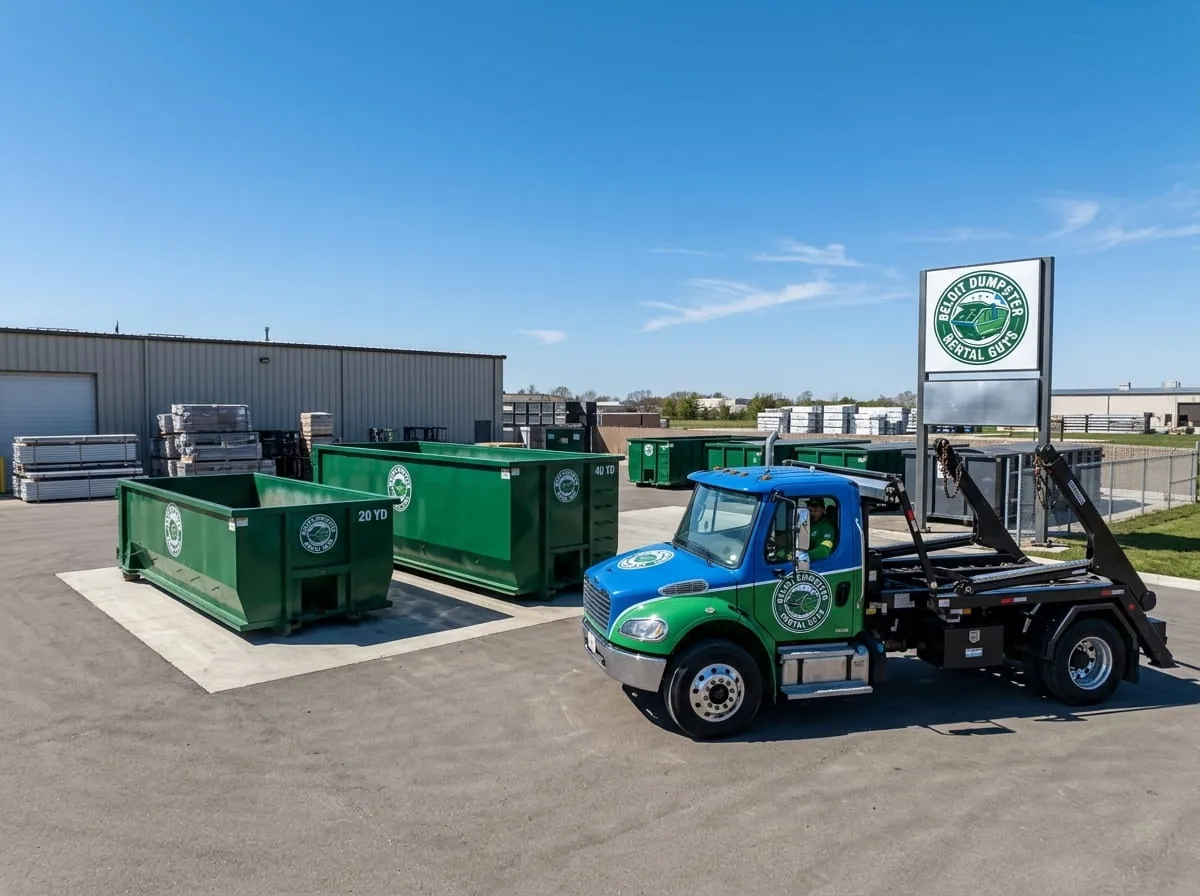
A tandem-axle hooklift truck with a full container is one of the heaviest vehicles that routinely uses a residential or rural road. That is precisely the profile seasonal postings are designed to keep off a thawing base.
It is not a technicality and it is not a matter of judgement. Driving a posted road overweight is an offence, it can damage a road badly enough to be visible for years, and the town that has to repair it will know exactly what did it.
So when we say a spring delivery to a rural property needs checking first, that is what we are checking.
What it means for your booking
Three practical consequences, in rough order of how often they come up.
The container may need to be smaller. Where a 30 yard fully loaded would exceed a posted limit, a 20 swapped may be the only workable answer. It is not an upsell in reverse — it is arithmetic about what can legally travel the road.
The date may need to move. Sometimes the honest answer is that a week or two makes the difference, particularly late in the season when postings start coming off.
The collection may need planning. A container delivered empty is one thing; the same container coming out full is another. On rural spring jobs we think about the exit at the point of delivery rather than discovering the problem later.
None of that applies to a job in the middle of Beloit or Janesville on city streets. It applies to the townships and the rural county roads, and it applies every year.
Winter is the easy season
Counter-intuitively, the best time to get a container onto a soft rural driveway is January.
Frozen ground carries a loaded truck that would cut deep ruts in the same gravel drive in April. If you have a rural clearance or an outbuilding demolition and a choice of timing, the frozen months are genuinely easier for access.
The one thing winter takes away is concrete disposal. The Clean Fill Facility west of the Janesville landfill closes from the beginning of December until the end of March, so masonry work in that window routes differently and costs differently. If you have concrete, that is the calendar constraint to plan around instead.
Planning around it
If you are booking a rural job for March or April, tell us the address when you call and we will check what is posted before confirming.
If you are running a spring build programme, factor it into the schedule in February rather than arguing about it in April. Contractors who work this county already do.
If your job can move, late spring is straightforward and midwinter is fine for access. Mid-March through April is the awkward window.
If a company promises you unrestricted delivery to a posted township road in April, ask them how. It is a reasonable question and the answer tells you a lot.
Book a container in Beloit
One flat rate covering delivery, seven days, pickup and disposal.
(608) 631-5568Questions readers ask about this
Will spring weight limits stop my delivery?
On city streets in Beloit or Janesville, no. On township and rural county roads between roughly mid-March and late April, possibly - and it may mean a smaller container or a slightly later date. We check what is posted before confirming.
Why is a container truck affected when cars are not?
Because a loaded hooklift truck is one of the heaviest vehicles that routinely uses a rural road, and seasonal postings exist to keep exactly that kind of axle load off a saturated road base until it drains.
Is winter a bad time to rent a container?
Usually the opposite for access. Frozen ground carries a truck that would rut a soft gravel drive in April. The only winter constraint is that the Clean Fill Facility closes December through March, which matters if you have concrete.
Who decides which local roads get posted?
The authority that maintains them - the county highway department or the town board. The WisDOT programmes cover state highways only, so town and county roads are posted separately and road by road.